In June 2026, New Zealand was strongly represented at the International Federation of Municipal Engineering (IFME) World Congress in Helsinki, Finland. The event brought together more than 350 delegates from over 30 countries to explore the theme of "Future Livable Cities", creating a valuable opportunity to exchange ideas on infrastructure, asset management, climate resilience and urban development.
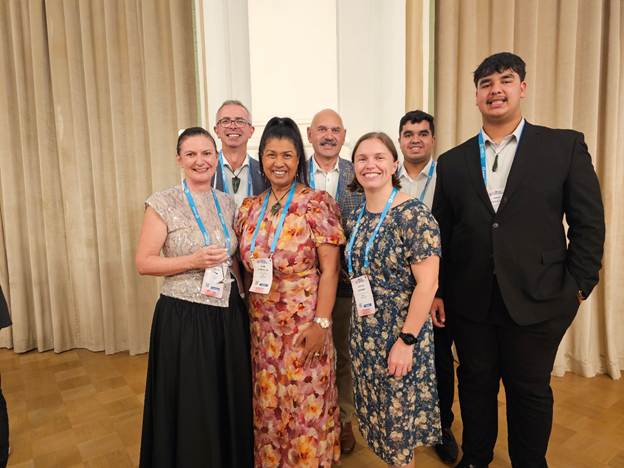 Picture: Kiwi Contingent at Helsinki Future Livable Cities Congress 2026
For our NZ delegation, the Congress was complemented by technical visits to Helsinki, Tallinn, Stockholm and Bergen, providing a unique opportunity to see first-hand how some of the world's most livable cities are responding to the challenges we also face in New Zealand: population growth, aging infrastructure, climate adaptation, housing pressures and the need to maximise value from existing assets.
A consistent message emerged from both the Congress and technical tours; planned development which integrates residential, commercial, social and environmental demands with public transport, cycleways, waste and water management, land use and waterways rehabilitation, and related infrastructure was strong across these countries.
Across every city visited, the connection between long-term planning, asset management and quality of life was impossible to miss.
Helsinki: Building a City Around Connectivity and Quality of Life
Helsinki demonstrated how a modern European capital can successfully prioritise strategic investment in public transport and active mobility, which can shape and embed into everyday urban life. The city's extensive tram network and dedicated cycling infrastructure make sustainable transport both practical and attractive and forms a backbone of urban movement, which is reliable, accessible and highly visible as a transport option. It was pleasing to see and experience a modern network of dedicated cycleways throughout the city.
Many of the challenges discussed during the Congress could just as easily have been raised in New Zealand. Climate resilience, infrastructure investment, demographic change, developing asset management capability and improving the use of data for long term decision-making were recurring themes. It is always a stark reminder to me that while geography may differ, the issues confronting municipal leaders are remarkably similar across the world to what we face here in New Zealand, and collectively there are great minds at work to improve the livability of our cities and towns.
One message in particular resonated with me. As Murray Pugh CEO of Āpōpō noted when reflecting on presentations from Helsinki's leadership:
"Helsinki seeks to grow sustainably and with resilience, where social and physical infrastructure is intertwined. Long term thinking is at the core starting with land use planning and a backbone of public transport and accessibility."
This integrated transport planning approach was evident everywhere, from airport-to-city public transport connections through to neighbourhood design.
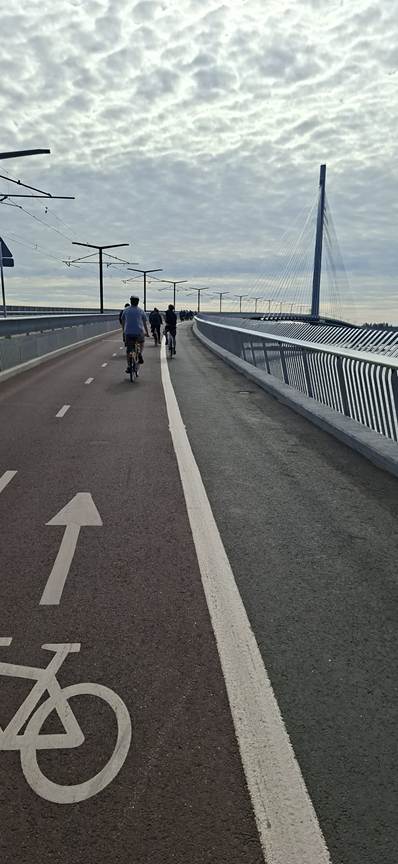
Picture: Active mobility through modern cycleways Helsinki
Tallinn: Preserving Heritage While Embracing Growth
Tallinn offered an impressive lesson in balancing rapid economic growth with heritage preservation.
The UNESCO World Heritage Old Town remains one of Europe's best-preserved 15th century medieval city centres, yet surrounding it is a city embracing new commercial developments, digital innovation, and residential growth. Rather than competing priorities, heritage values and development growth have been woven together, co-existing to reinforce the city's defining identity.
The lesson for New Zealand is clear. Strong stewardship, thoughtful and careful spatial planning with a long-term muti generational perspective make it possible to preserve what our communities value, hold onto our unique cultural identity, while still enabling modernisation, growth and timely renewal. This approach respects both history and future aspirations.
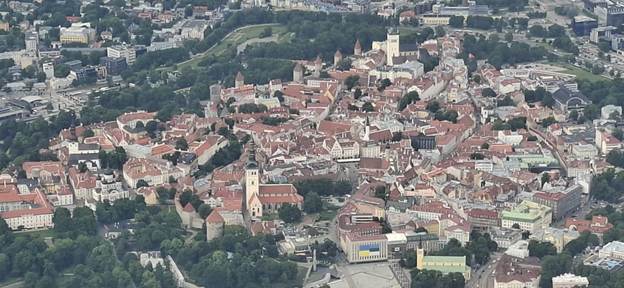
Picture: Tallin Old Town as viewed from above within a modern and growing city.
Stockholm: Investing Today for Tomorrow's Needs
Stockholm is experiencing significant population growth with corresponding housing demand and is responding through major large-scale investment in transport, wastewater and environmental infrastructure.
The city's integrated approach links housing, transport and environmental services, creating a coherent framework for future growth. Preservation of the historic 13th century Gamla Stan Old Town district sits alongside modern metro systems, commuter rail networks and ferries that connect the region's many islands. These investments reflect a broader Scandinavian perspective that infrastructure planning spans generations, not election cycles.
Particularly striking was the city's commitment to long-term environmental outcomes, including major investments to protect water resources and support future urban expansion. Stockholm’s integrated approaches to transport, housing and utilities provides a strong example of how cities can plan for expansion whilst maintaining their distinctive character and quality of life. It was also a wonderful opportunity to take a public transport ferry to the Vasa Museum, an incredible experience to explore and touch the world’s only preserved 17th century warship Vasa which sank on its maiden voyage in 1628.
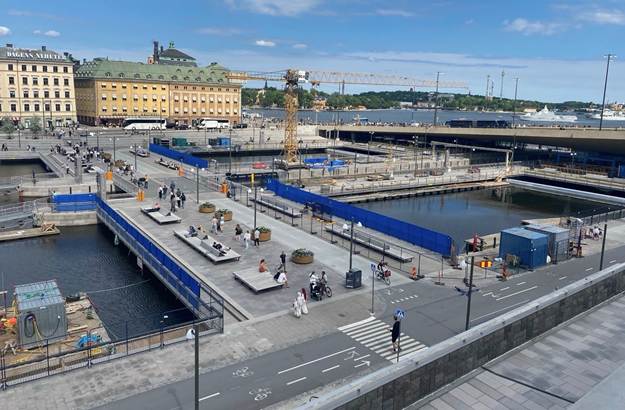
Picture: Stockholm facing Gamla Stan, inner city harbour controls and entrance to new metro station at Slussbron.
Bergen: Innovation Through Constraint
If Helsinki demonstrated integration and Stockholm demonstrated scale, Bergen demonstrated innovation in a constrained geography. Bergen is the jewel of Norway and a fascinating case study in urban infrastructure management. As one of Norway’s most popular tourist destinations and home to the internationally recognized World Heritage harbour district and wharf area Bryggen, the city accommodates visitors and residents all year round.
Surrounded by seven hills and constrained transport corridors, the city faces significant geographical challenges. Yet those constraints have become catalysts for creative solutions.
Bergen is investing heavily in transport electrification, multimodal travel options and expanded active mobility infrastructure, encouraging the use of E-Bikes over E-Scooters which it is phasing out. One of the most memorable examples was the innovative use of tunnels, including dedicated service tunnels that support cycling and safer commuter movement through difficult terrain.
There was a consistent multimodal transport shift observed in Scandinavia; from a 3km cycle and walking commuter tunnel parallel to the tunneled tramline in Bergen, to the 1.2km waterway bridge for tram, cycles and pedestrians only, in Helsinki, their answers to climate change, resilience and social engagement and cohesion were purposeful and determined.
Bergen has also achieved significant progress in sustainable waste management. Bergen's vacuum waste collection systems, waste transfer, recycling and waste to energy initiatives demonstrate how infrastructure innovation can improve sustainability, reduce heavy vehicle movements and enhance urban amenity in a true district scheme approach.
Could the development of district heating at a wider level, and waste schemes be viable in certain towns and cities in New Zealand? District heating was examined after the earthquakes in Christchurch. Industrial users in our geo-thermal districts such as Rotorua and Taupo sometimes share geothermal process heating. A new wastewater heat recovery system providing heating and cooling for the Parakiore Sports Centre in Christchurch – including heating the swimming pool’s water has been developed. Eleven towns and cities in the North Island of New Zealand have district schemes for reticulated natural gas. We have no waste to energy incineration in New Zealand currently, there is one proposed for Waimate.
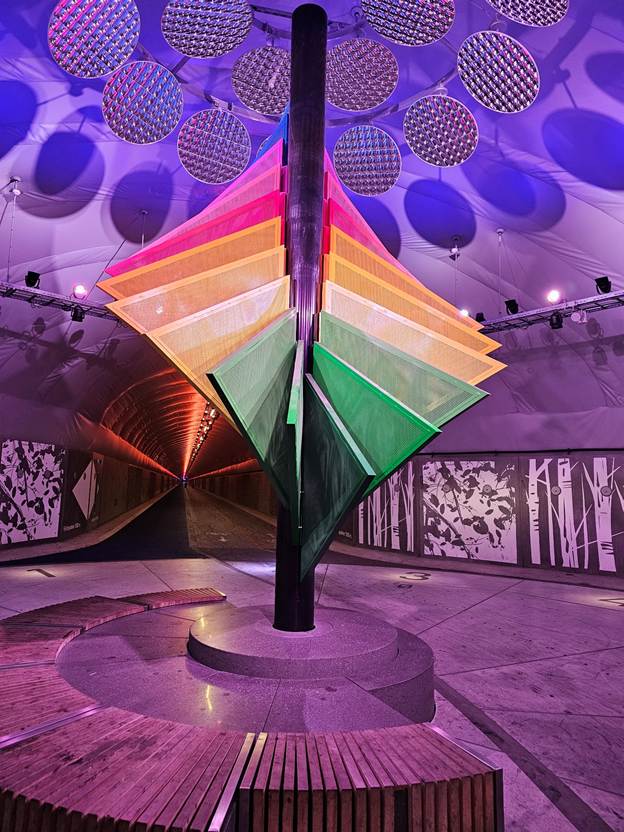 Picture: Bergen 3km cycle and walking tunnel (repurposed service tunnel).
Asset Management as the Foundation
While the physical infrastructure was impressive, perhaps the most important observation was what sat beneath it all.
Across every city and every discussion, long-term intergenerational thinking was supported by strong asset management principles, integrated spatial planning, data-informed decision making and a clear understanding of community outcomes.
Reflecting on this, Murray Pugh captured the connection between infrastructure investment and societal outcomes:
"The outcome of sound asset management... has real impacts. The resulting impact of asset management done well is that past, current and future infrastructure investment meets whole of life social, economic, cultural and environmental needs, thereby sustainably enabling our collective desired quality of life."
That statement aligns closely with what I observed throughout Scandinavia and the Baltics. Successful cities are not simply investing in assets. They are investing in the systems, governance, spatial planning disciplines and community outcomes that sit behind those assets. Cross-sector collaboration, strong cultural and asset management foundations remain critical to delivering resilience within communities.
Bringing the Lessons Home
The visit reinforced that New Zealand's asset management and livability challenges are not unique. Cities and regions around the world, and in countries where you would expect to see something better, are grappling with aging infrastructure, climate resilience, housing demand and affordability pressures.
What stood out was the consistency of the response by Scandinavia and the Baltics:
- Long-term, intergenerational thinking.
- Integration of transport, land use and infrastructure planning.
- Strong asset management foundations.
- Preservation of heritage alongside modernisation and growth.
- Commitment to sustainability, resilience and livability.
As New Zealand looks ahead to hosting the IFME World Congress in Christchurch in 2030, there is an exciting opportunity to continue these international conversations and strengthen our role in advancing infrastructure and asset management practice globally.
The greatest lesson from this journey was that livable cities do not happen by accident. They are intentionally planned, carefully governed and consistently managed over generations.
And that is ultimately the true value of asset management. If you are interested in these big challenges, the time is now to act and lead.
To also read Murray Pugh’s recent CE update reporting on the Helsinki Congress, the link is here https://apopo.co.nz/reflections-on-ifme-world-congress-2026/